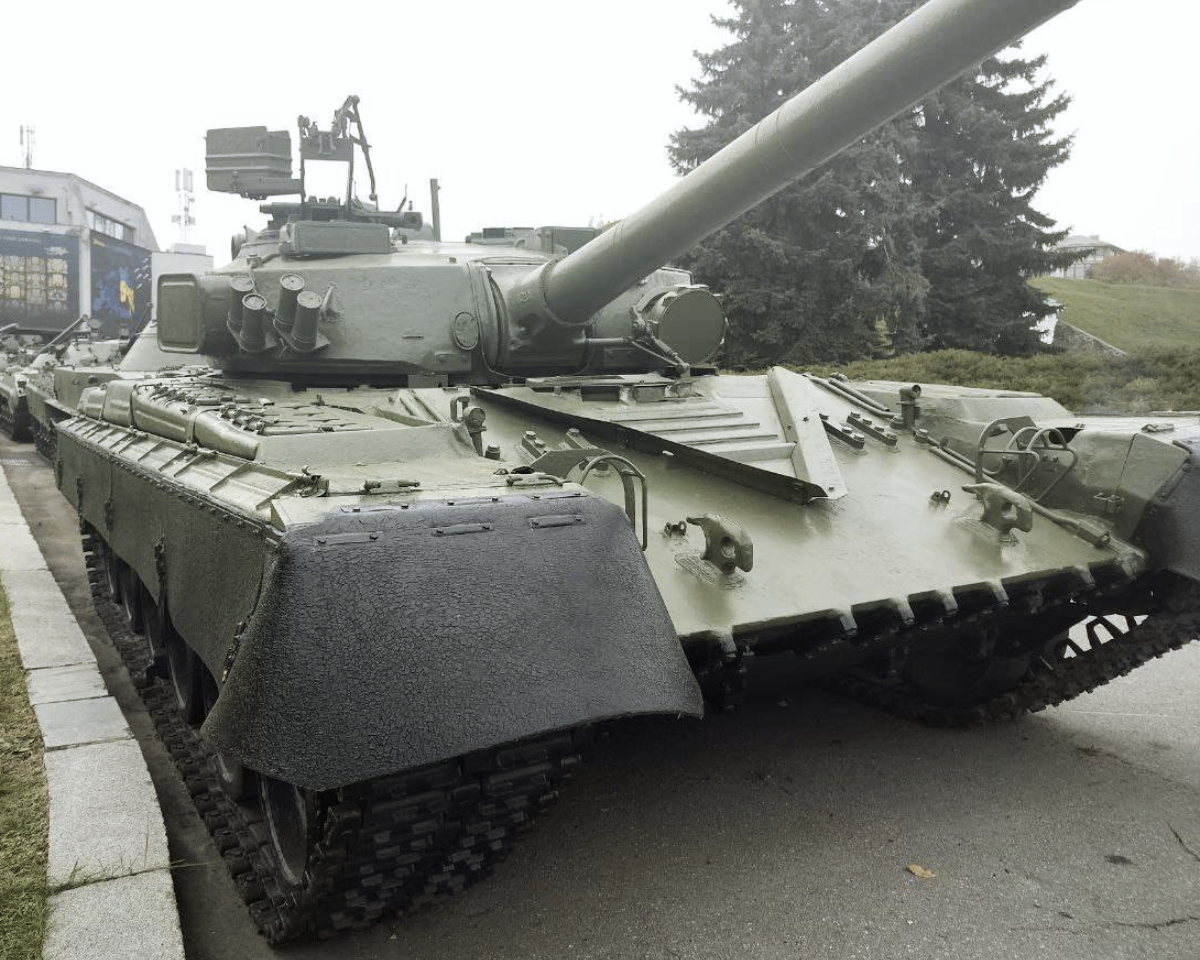

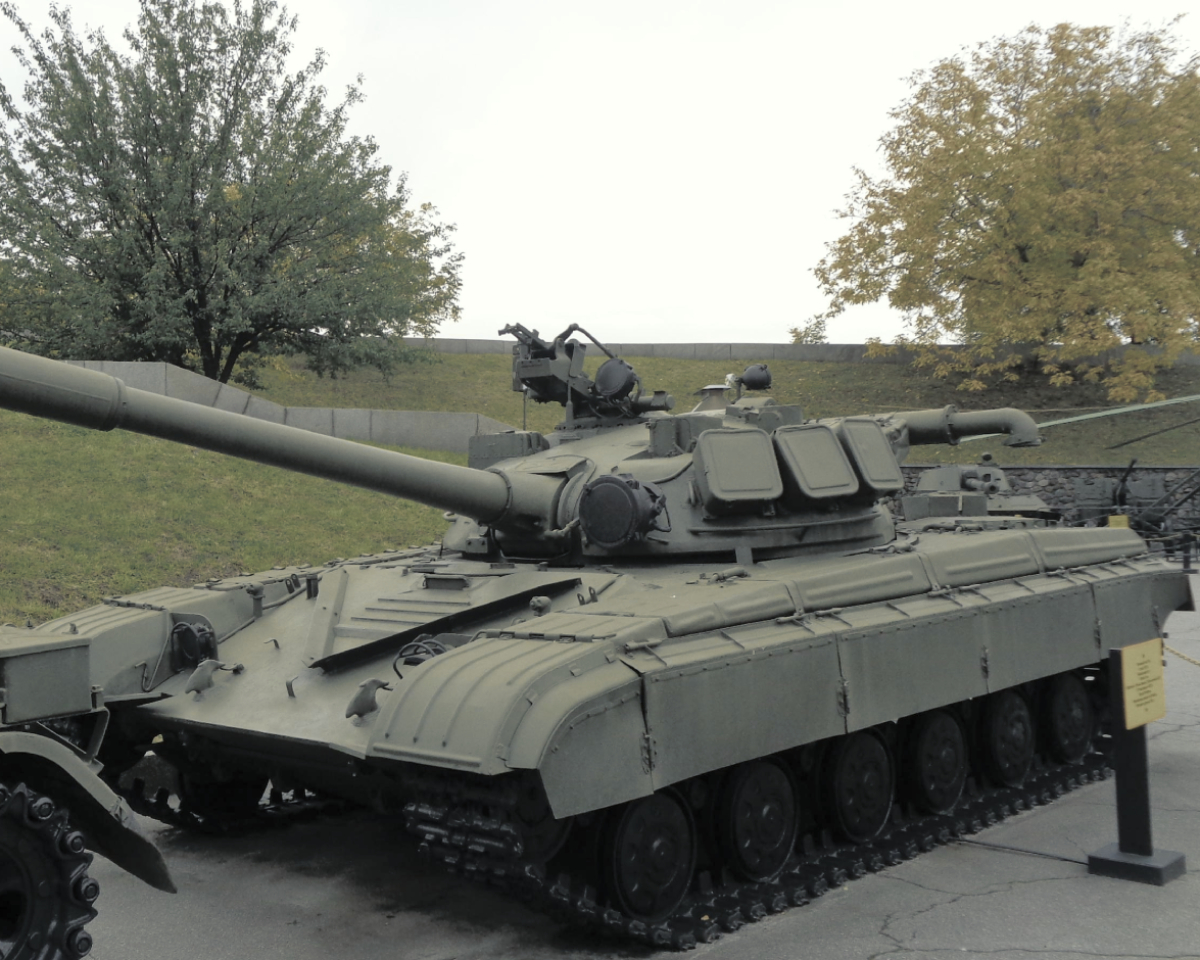
At the beginning of the 1970s, the Kharkiv Machine-Building Design Bureau (hereafter simply KhKBM) carried out, on its own initiative, a series of studies in the form of preliminary designs for a deep modernization of the production T-64A tank. As a result, in 1973 a technical design for the T-64A-2M tank was completed under the supervision of N. A. Shomin, the first deputy chief designer of KhKBM. The project of the new tank included an in-depth development of ways to further improve firepower, protection, and mobility compared to the production T-64A.
The T-64B tank incorporated fundamentally new design solutions. For the first time, an automatic fire-control system was developed, featuring a sight with a laser rangefinder, a ballistic computer with input-data sensors, and a guided weapons system. A batch of prototype vehicles equipped with the «Kobra» system was produced in 1973, even before testing was completed. At that time, the system was far from perfect (57 launches, 30 hits, 14 failures, 13 misses). The system was brought to an operational state in 1977, when its mass production began for installation on the T-64B tank («Object 447A»).
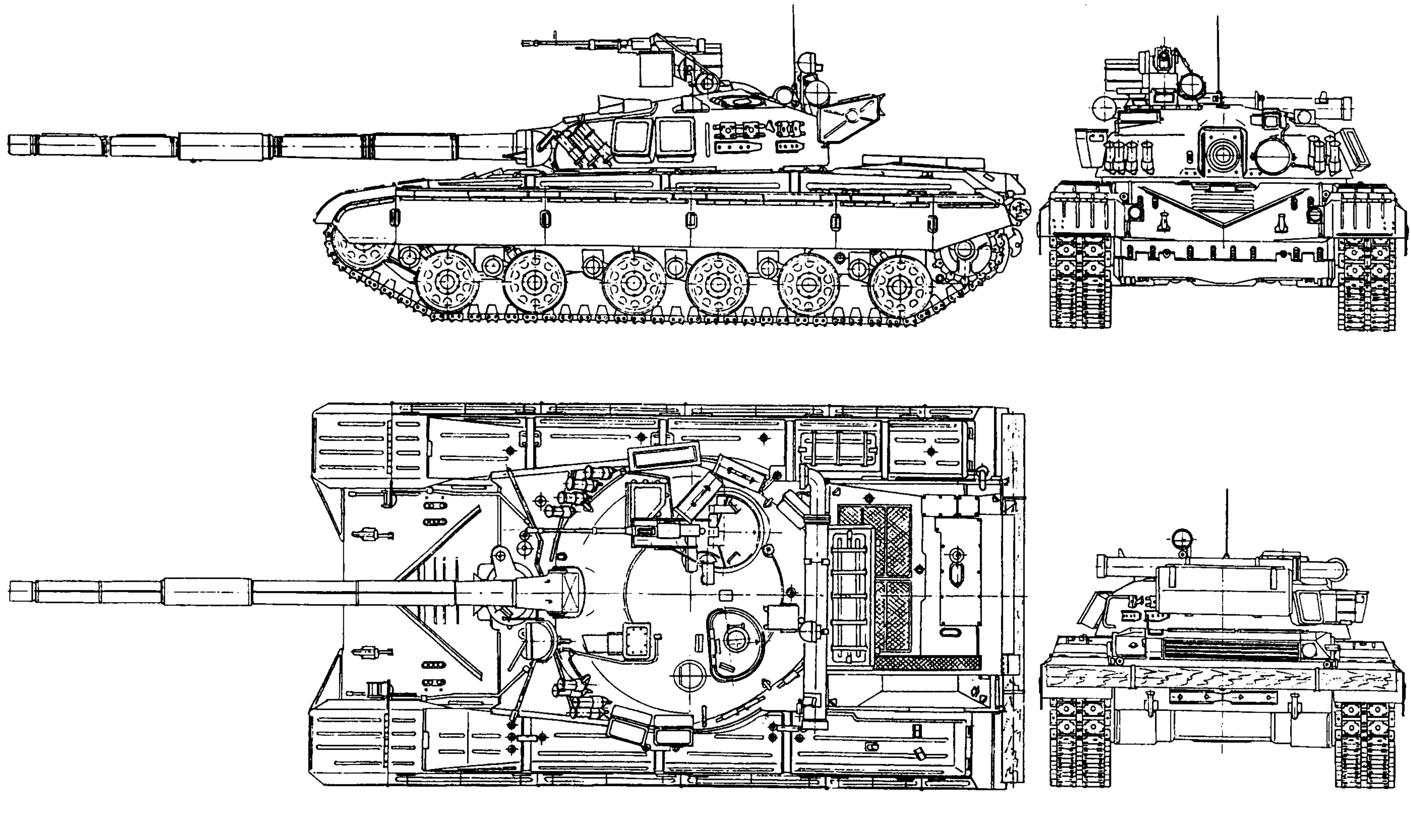
The 1A33 fire-control system installed on T-64B tanks is designed to provide effective firing from the gun and its coaxial machine gun at enemy tanks and other armored targets moving at speeds of up to 75 km/h, as well as at small-sized targets and enemy personnel. It enables accurate fire both from a stationary position and on the move at speeds of up to 30 km/h, at the effective ranges of the tank’s gun and machine-gun armament, whether engaging targets through the sight-rangefinder under direct visibility or firing from covered positions. The 1A33 system, together with the 9K112-1 guided weapons complex installed on the T-64B, allows the tank to fire guided projectiles from its main gun.
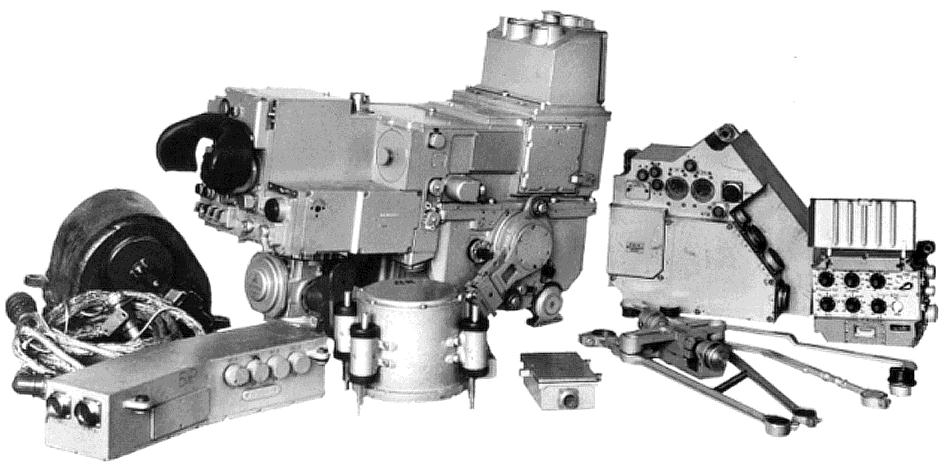
The 1A33 fire-control system includes the 1A34 sighting complex, the 2E26M weapon stabilizer, and a set of input-data sensors. The 1A34 sighting complex consists of a laser sight-rangefinder, the 1G42 tracking device with its electronic unit, the 1G43 firing-authorization unit, and the 1V517 tank ballistic computer. The input-data sensors include the 1B11 wind sensor, the 1B14 tilt sensor, the tank speed sensor, and the course-angle sensor. The fire-control system equipment is installed in the tank’s fighting compartment and partially in the hull. When operating with the fire-control system, one primary mode and five emergency backup modes are provided, which are used in the event of failure of components or units within the system.
To observe the battlefield, the tank commander is equipped—alongside single-power prismatic devices—with the combined (day/night) periscopic binocular device TKN-3V, which provides 5× magnification in the daytime channel and 4.2× magnification in the nighttime channel, operating together with an infrared illuminator. The maximum target identification range with the illuminator is up to 400 meters. The commander is able to designate targets detected by him to the gunner.
In 1975, the T-64B tank equipped with the 1A33 fire-control system underwent extended testing, including trials in harsh winter conditions. The effectiveness of the system was rated highly; however, several failures occurred. The most “unpleasant” and inexplicable malfunction was the failure of the firing-permission system at temperatures close to –50°C. Immediately after testing was completed, the tank was sent to a proving ground for further investigation. The commission was instructed to arrive at the proving ground without delay, perform a month-long series of tests in climate chambers, determine the cause of the malfunction, and identify necessary modifications. Within two days, an analysis of the system’s circuit design and measurements of the fire-control system’s components were carried out in the climate chambers. The cause of the malfunction remained unknown, but the issue was resolved.
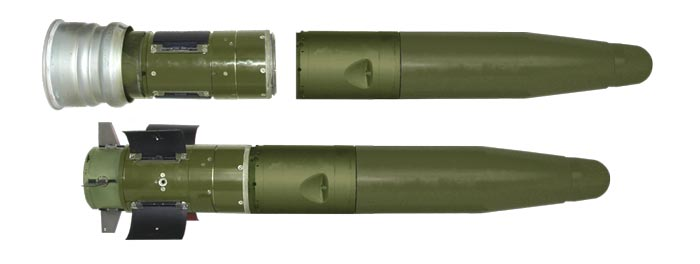
The 9K112 «Kobra» guided weapons system, like the 1A33 fire-control system, is designed to ensure effective firing from the gun at tanks and other armored targets moving at speeds of up to 75 km/h, as well as at small-sized targets from both stationary positions and on the move, at tank speeds of up to 30 km/h, at ranges from 500 to 4,000 meters, provided the gunner has direct visual contact with the target through the sight-rangefinder and tracking device. The 9K112 complex includes the 9M112 guided projectile, the 9V387 control-circuit unit, the 9I36 kit, and the 9S461 ground control equipment. The guided-weapons system equipment is installed in the fighting compartment of the tank as separate removable modules. The flight of the 9M112 guided projectile is controlled via a radio command link. The 9S461 control equipment has five frequency channels and two control-signal codes. Feedback from the projectile to the tank’s control equipment is provided automatically by a modulated light source (emitter) installed onboard the projectile. The projectile consists of two sections placed in the autoloader trays and joined together in the tray during ramming into the gun chamber. The projectile is equipped with crescent-shaped wings that unfold after leaving the barrel, generating lift and imparting rotational motion around its longitudinal axis during flight. The projectile’s steering fins serve as its control surfaces in flight.
The 9K112 system allows a tank company to conduct simultaneous firing at closely spaced targets, including simultaneous firing from two tanks at a single target, provided that the interval between the firing tanks along the front is at least 30 meters and that the radio command links operate on different frequency channels and control codes.
The «Kobra» system could also be effectively used against aerial targets, but this required timely external target designation. For example, to engage a helicopter at a distance of 4 km, flying at speeds of up to 300 km/h at altitudes of up to 500 m, the corresponding target designation needed to be received when the helicopter was still at 5 km. For instance, in 1979, tests were conducted in Gorokhovets to evaluate the use of the «Kobra» system against helicopters, yielding positive results.
One of the problems of the «Kobra» guided weapons system was the dust cloud created after firing, which obstructed the gunner’s view of the target. The initial idea of using a guided projectile without a sustainer engine and relying on a rod-type ejection charge was abandoned — the shockwave from the muzzle blast raised dust and prevented proper guidance of the projectile. However, dust formation remained an issue even when using a sustainer engine and a small ejection charge. To fully resolve this problem and improve firing effectiveness, various muzzle gas disperser designs for the gun were developed in 1978–79. There were versions with screw-on gas dispersers, as well as variants integrated directly into the barrel’s construction.
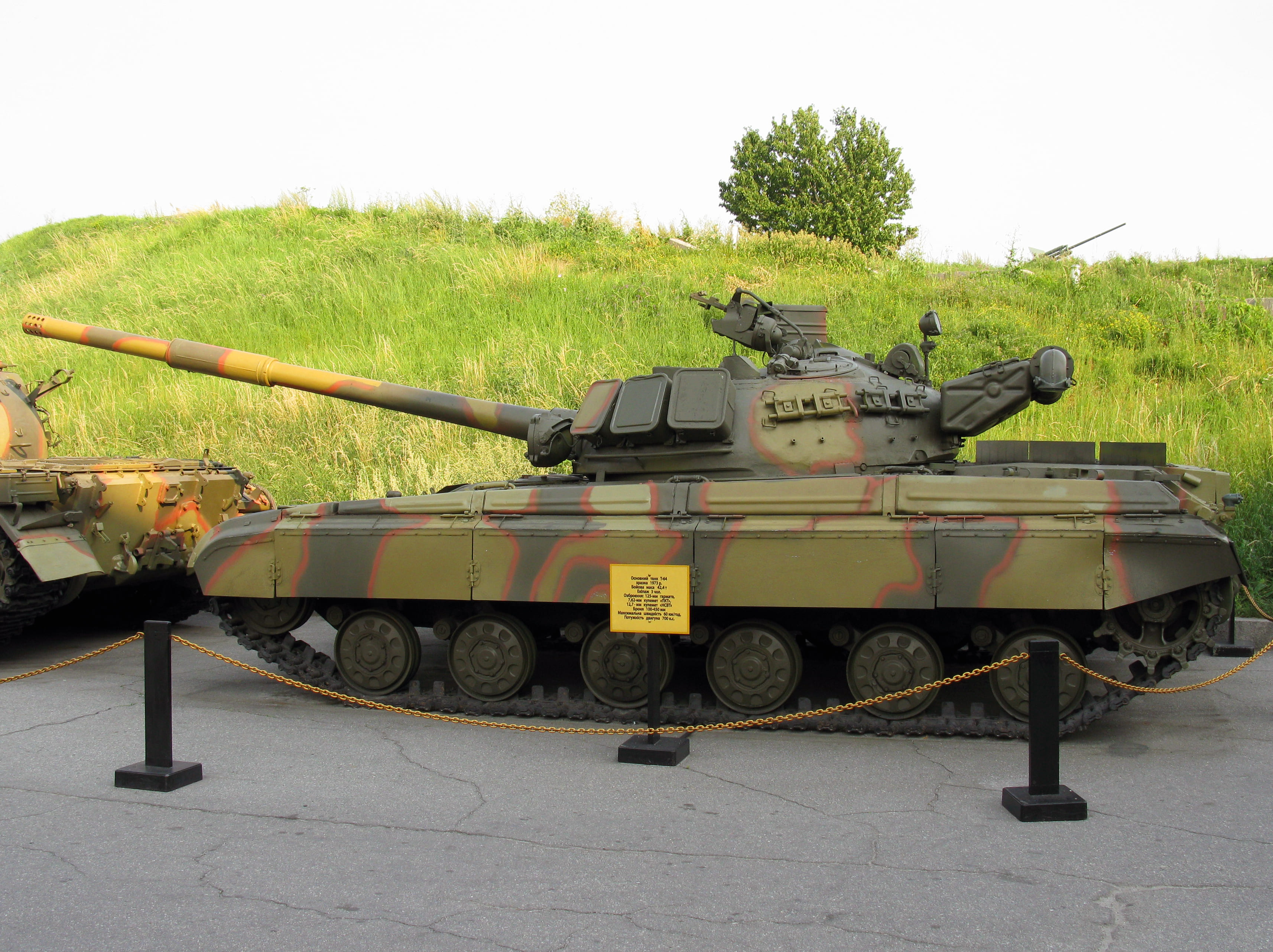
The T‑64B became an important milestone in the development of a new generation of Soviet tanks, combining enhanced armor, an automated fire-control system, and the “Kobra” guided weapons complex. Testing confirmed the effectiveness of these solutions, and the correction of identified issues ensured reliability under combat conditions. This tank not only increased the firepower and protection of units but also laid the technological foundation for future developments in tank design. Early T‑64B tanks were either sent for decommissioning in the 2000s or preserved as museum exhibits.