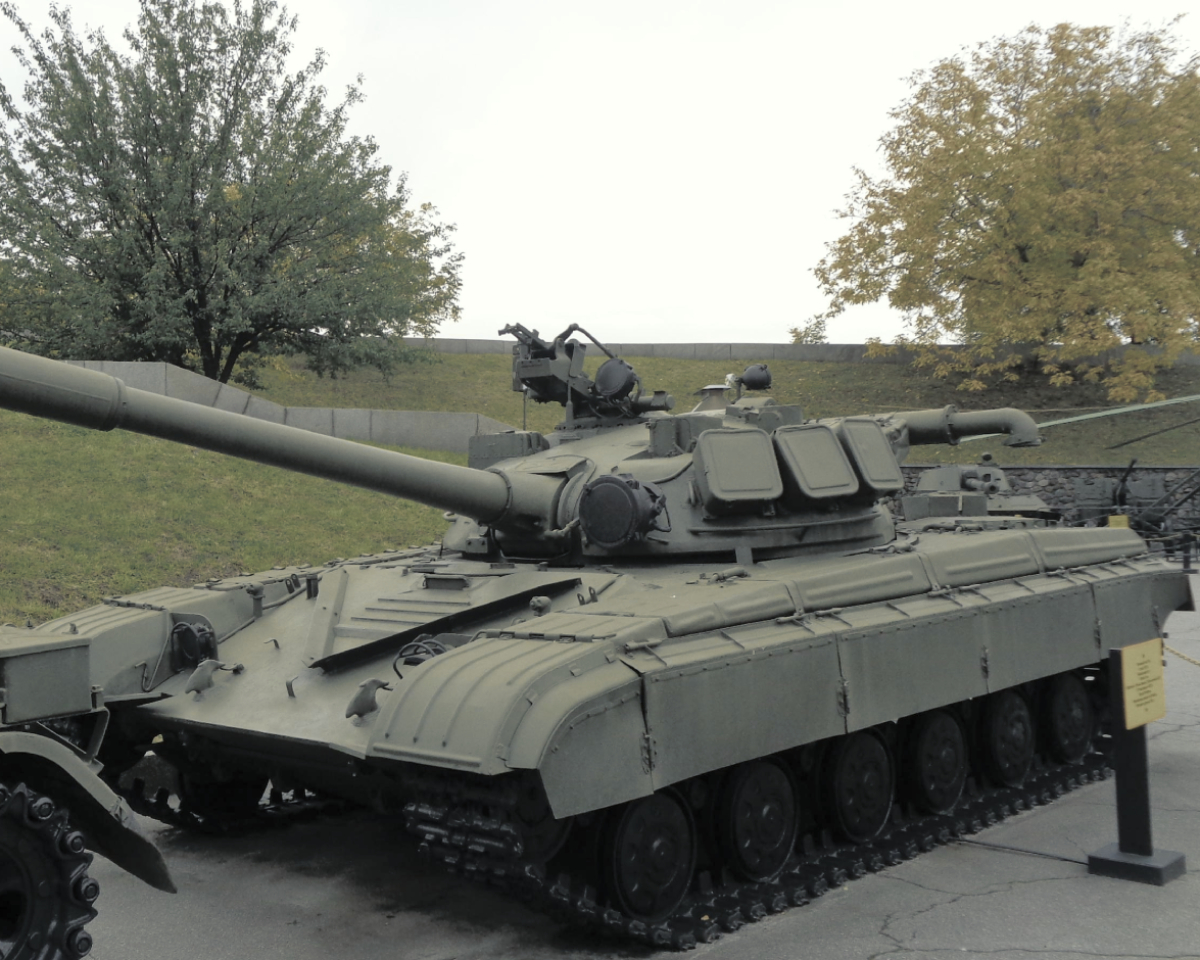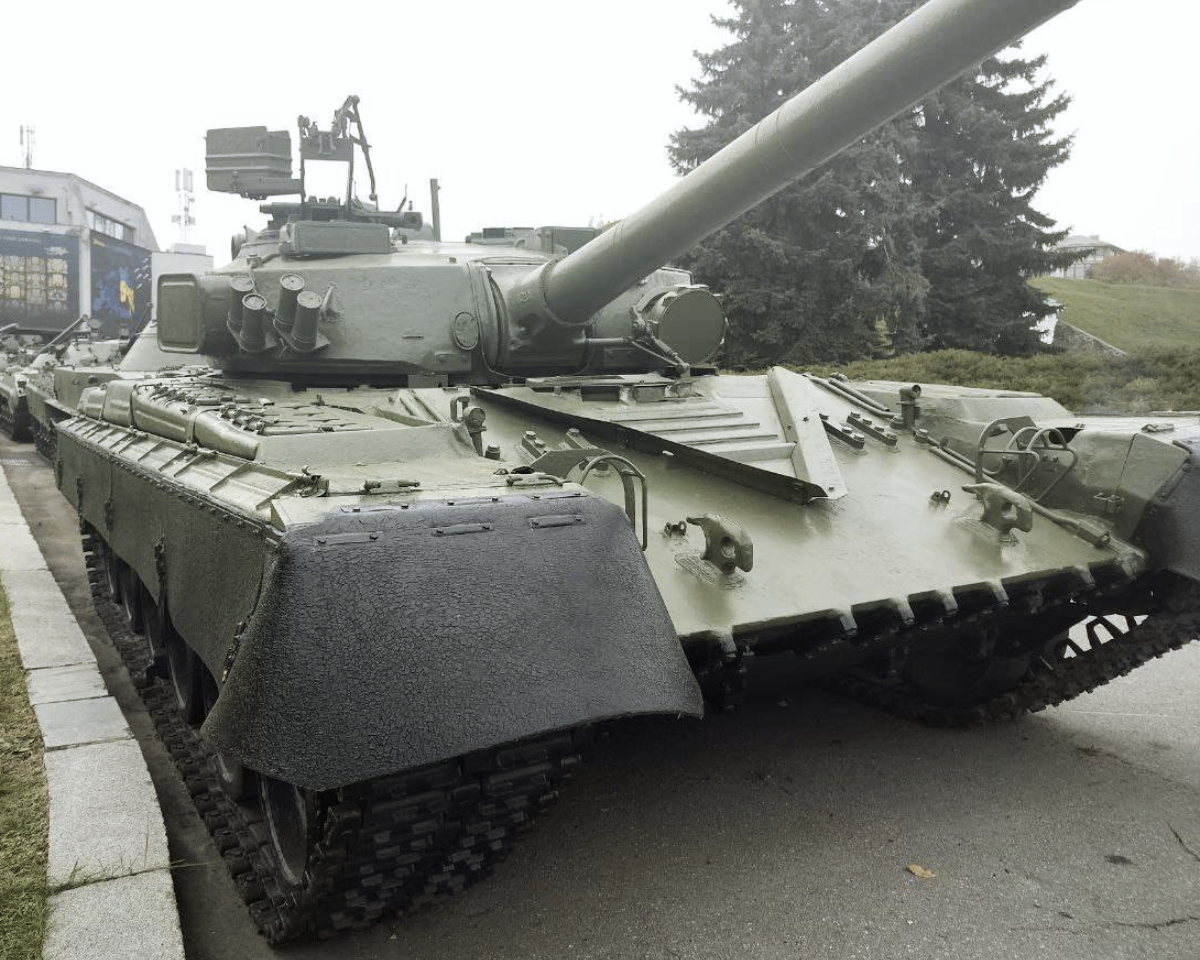

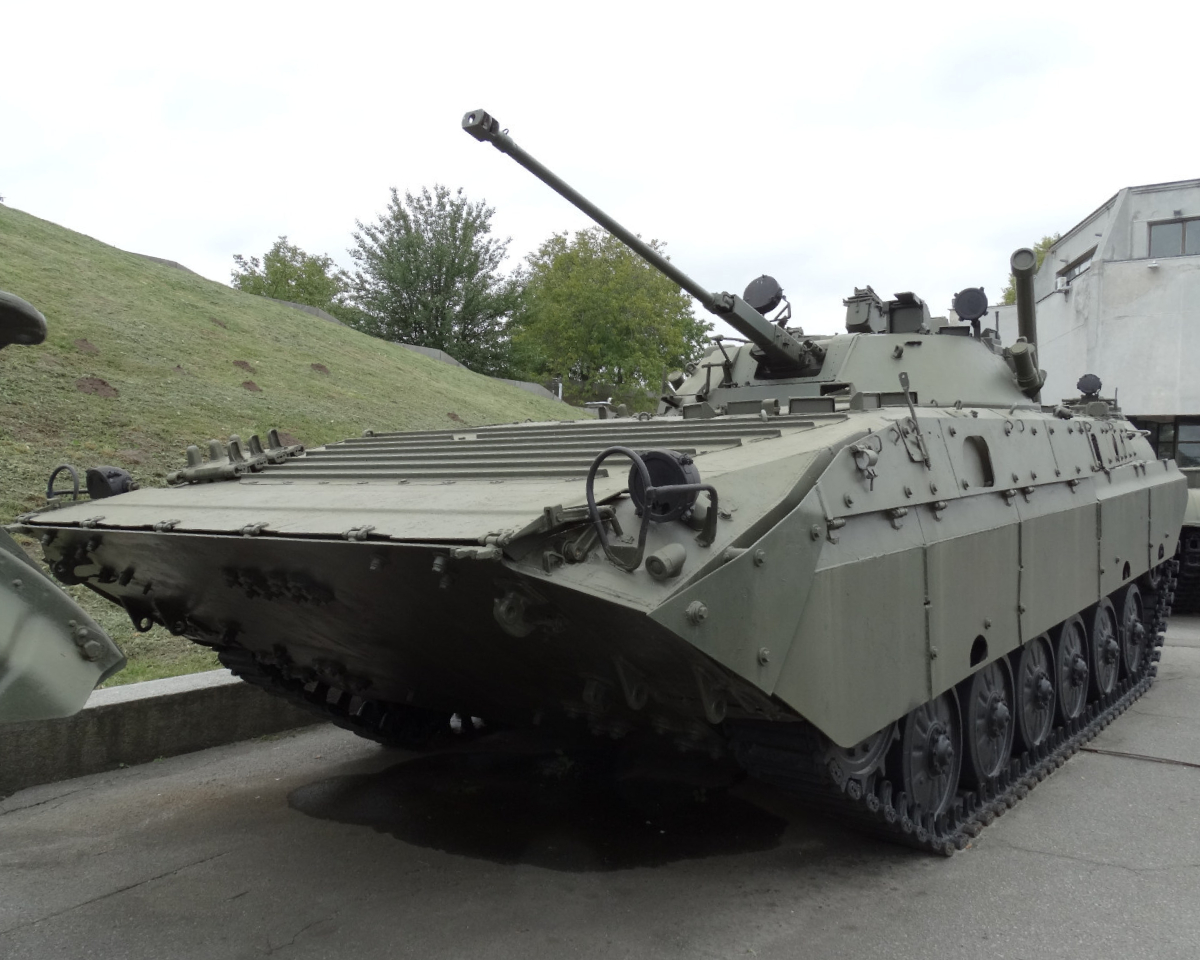
During combat operations in Afghanistan, the Soviet army faced a new reality. The experience of the war showed that the armor of the BMP-2, which was similar to that of the BMP-1, did not provide an adequate level of protection, putting the lives of the crew and infantry at risk. Therefore, as early as 1981, the Kurganmashzavod Design Bureau, in collaboration with the Steel Research Institute, developed a set of additional armor and mine protection designed for installation on BMPs at military repair facilities. BMP-2s equipped with these kits were delivered to the Limited Contingent of Soviet Forces in Afghanistan from 1982 under the designation BMP-2D (“D” for upgraded). Similar kits were also installed on BMP-1s; however, for unknown reasons, they were not as widespread as on the BMP-2s.
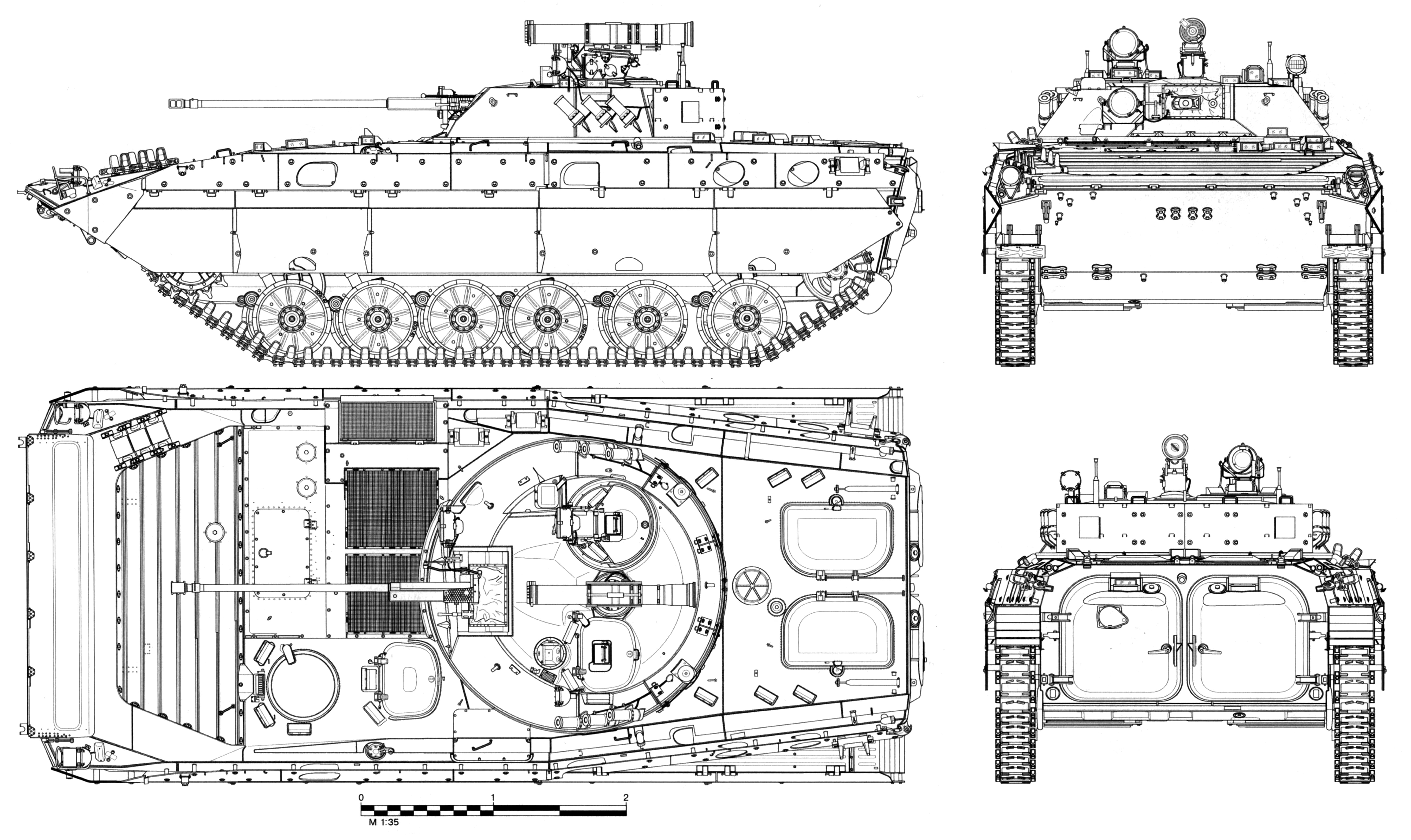
The frontal arc of the hull and turret of a standard BMP-2 was supposed to withstand a 23 mm armor-piercing incendiary round fired from 500 meters, while the side armor was rated to stop a 7.62×54 mm B-32 round from 75 meters. However, the enemy, in addition to light small arms, made extensive use of heavy machine guns such as the 12.7×108 mm DShK and the 14.5×114 mm KPVT, which allowed them to effectively penetrate the BMP-2, as well as other lightly armored vehicles, from virtually any angle of the hull or turret across a wide range of engagement angles.
The designers reinforced the vehicle’s hull sides with additional 6 mm steel applique screens. On the upper side plates, the screens are mounted on standoff brackets, creating spaced armor relative to the main hull. The screens on the lower side plates are installed directly on the fenders above the tracks, strengthening the most vulnerable area. This arrangement allows the first screen to partially break up or destabilize an incoming bullet or shaped-charge jet, while the main armor plate absorbs the weakened impact. The spaced configuration is particularly effective against heavy-caliber rounds and older shaped-charge munitions: when the first layer is penetrated, the core becomes deformed, its velocity decreases, and in the case of a shaped charge, the jet forms earlier than optimal and loses penetration capability.
The sloped roof plates of the hull, which on standard models are only 5–6 mm thick, were reinforced with additional 6 mm steel armor plates. The hull floor also received substantial strengthening: under the driver’s and commander’s stations, blast-mitigation pods were installed, consisting of a frame made from metal channel or angle sections fitted with additional 10 mm steel armor plates. Since the base hull floor is 6 mm thick, this insert more than doubles the protection in this critical area. The additional plate also covers part of the lower side plate (the redan), and the driver’s seat is mounted not to the floor but to a separate transverse beam, reducing the transmission of the blast wave to the crew’s spine in the event of a mine detonation. The turret’s rear wall, which is 10 mm thick, was reinforced with a 6 mm curved steel armor plate. This shape helps deflect fragments and reduces the likelihood of penetration at medium and long ranges.
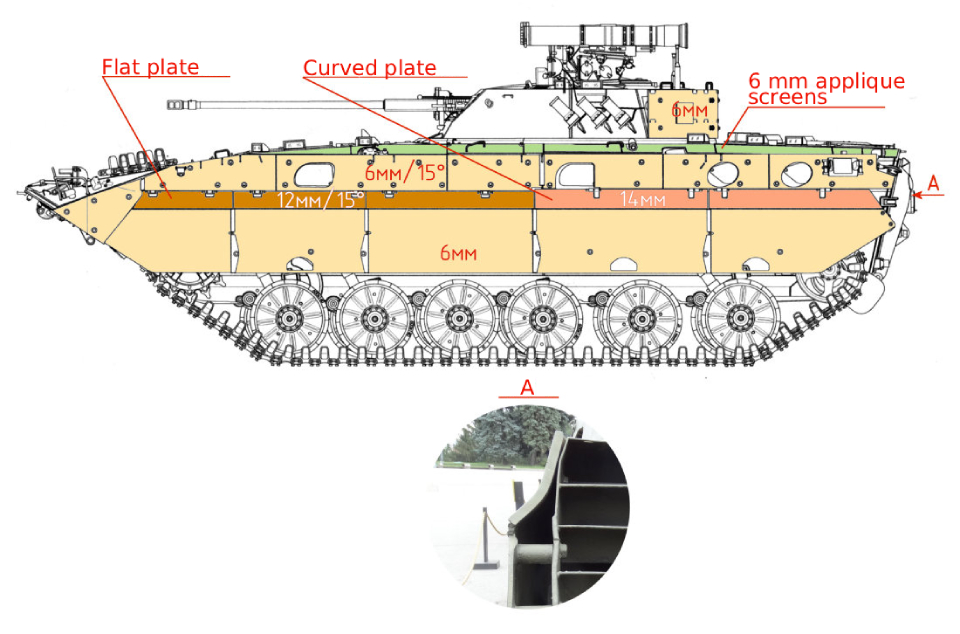
This set of measures provided the hull’s side projection with resistance against 12.7×108 mm B-32 armor-piercing rounds, and the rear section with protection against 7.62×54 mm rounds from any distance and at any angle of attack. The reinforced hull floor could withstand mine blasts with charges of up to 1.2 kg of explosives under the hull and up to 2.5 kg under a road wheel. Of course, an anti-tank mine would still be fatal for the vehicle; however, the enemy often used anti-personnel mines and improvised explosive devices, against which this package of improvements significantly increased crew survivability.
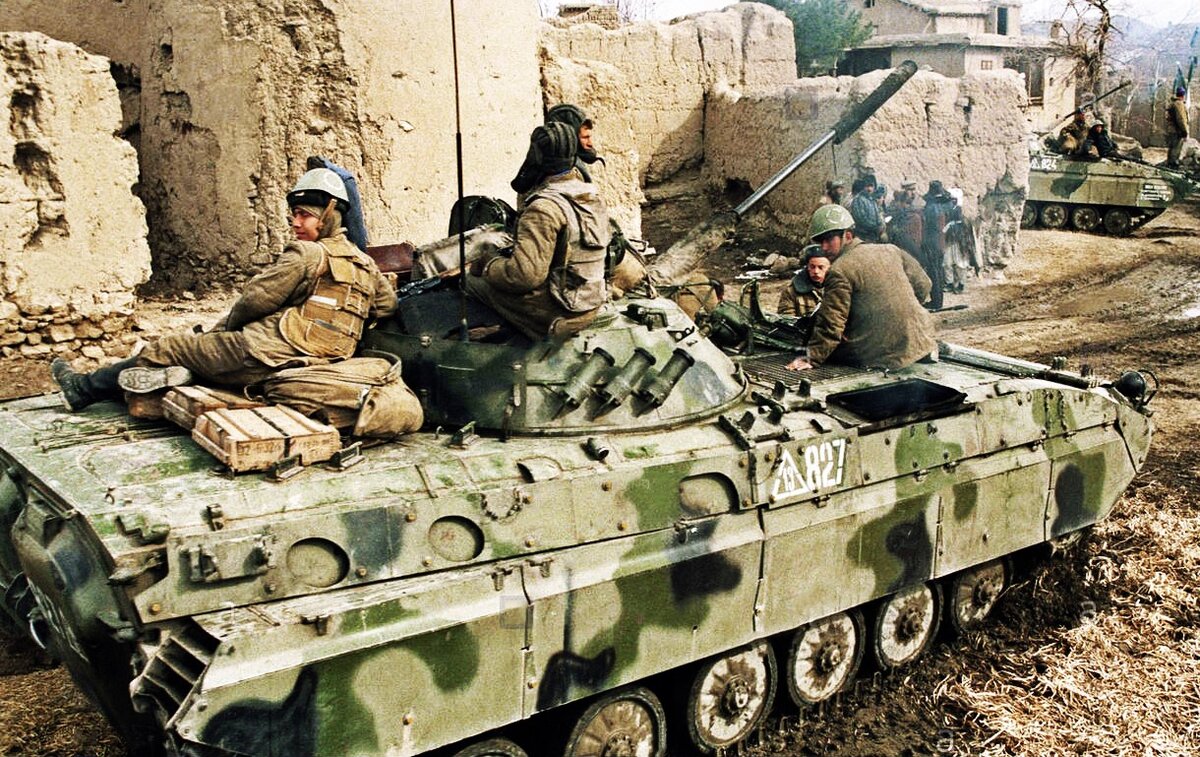
Although no work was carried out to improve the protection of the hull and turret roof, or the rear section of the hull, even the measures that were implemented made it possible to reduce BMP crew losses by 1.5–2 times. The combat weight of the BMP-2D increased to 14.5–15 tons, and the vehicle lost its amphibious capability, which was important in the conditions of Europe with its many rivers, but not in Afghanistan. After the end of hostilities and the withdrawal of the units of the Limited Contingent of Soviet Forces to their permanent bases, the additional protection kits were removed from most vehicles.